Ever scroll through a shiny Denver rental listing and think, “Is this really a deal?” You are not alone. Denver has strong demand drivers, but success depends on reading listings with an investor mindset. That means confirming what is legal, what revenue is realistic, and what expenses and risks you are actually taking on.
In this guide, you will learn a simple, Denver-specific way to scan short-term and long-term rental listings in minutes. You will see the exact legal checks to run, the revenue clues to trust, and the red flags to avoid. Let’s dive in.
Start with the legal filter
Before you model any numbers, make sure the strategy you want to run is allowed. In Denver, legal fit is the first gate.
STRs: primary residence only
Denver limits short-term rentals to your primary residence. You must apply for and hold a short-term rental license, and the city checks multiple indicators to confirm primary residence. Advertising an STR without a license is unlawful, and you must show your license number in listings. You also need at least $1 million in liability coverage that includes STR use, or you must list only on platforms that provide equivalent coverage. Review the city’s rules on the Denver short-term rental licensing page.
If a property is not your primary residence, that is a hard stop for STR in Denver unless you change your plan.
Look for the license number in the ad
Denver requires STR license numbers to be displayed in ads. If a listing does not show a number, treat it as a red flag and verify before you underwrite. This one check saves time and prevents expensive surprises.
HOA and condo rules can override
HOAs and condo associations can prohibit STRs even if the city allows them in your zone. If you see a condo or a building with on-site management, ask for the governing documents before you model STR income. The city’s STR guidance also notes that HOAs may ban STRs, so confirm early using the Denver short-term rental licensing page.
Long-term rentals need a license too
Denver’s residential rental licensing program applies to most rentals over 30 days, including single-family homes. Expect licensing, possible inspections, and tenant-rights information requirements. Start your due diligence with the city’s overview of the residential rental licensing program.
Read revenue like a pro
Once the legal fit is clear, turn to revenue. Anchor your expectations in market data, then cross-check with live calendar behavior.
STR baselines: ADR, occupancy, seasonality
For short-term rentals, you need average daily rate and occupancy. Start with a neighborhood snapshot from a provider like AirDNA. AirDNA’s Denver overview shows market-level occupancy in the mid 60 percent range and ADR in the low to mid one hundreds, which you should then refine by ZIP or neighborhood. Use the AirDNA Denver overview as your baseline and drill down before you model.
Seasonality matters in Denver. Demand often spikes around big events, Red Rocks concerts, and major conventions. If your target is well located, event dates can raise ADR and weekend occupancy. Keep an eye on the Red Rocks schedule when sampling dates.
Calendar reading: your best free STR signal
Open the listing calendar and count the next 30 and 90 days. Separate “booked” from “blocked” days. Booked nights drive revenue. Blocked nights can mean owner use, maintenance, or a test listing. Look for clusters. Many weekend bookings around peak events can be a positive signal. Scattered single nights may hint at lower-quality demand.
If you are analyzing several listings at once, you can pull the city dataset from InsideAirbnb to compare booked versus blocked nights and see host patterns at scale.
Long-term rent comps, the right way
For long-term rentals, blend a city-level trend view with hyperlocal rent samples. Use Rentometer for neighborhood or ZIP-level comps and then sense check against active listings to avoid overestimating. Start with Rentometer’s Denver rent snapshot and supplement with current listings for similar bed and bath counts.
Expenses and taxes you must model
Gross revenue is only half the story. Denver has specific taxes and requirements that change your net.
STR taxes and required insurance
Denver’s Lodger’s Tax is 10.75 percent of the lodging amount. Hosts must register and remit lodger’s tax. Even if platforms collect some taxes, you may still be responsible for filings. Get the details from the city’s Short Term Rental Taxation Information.
Budget for platform fees, cleaning and turnover costs, utilities, insurance, and a maintenance reserve. The city also requires at least $1 million in liability coverage that includes STR use, or you need to list only on platforms that provide equivalent coverage. Review the requirement on the Denver short-term rental licensing page.
Long-term operating costs
For long-term rentals, include property taxes, insurance, HOA dues if applicable, utilities you cover, a vacancy allowance, and a capital reserve. Confirm licensing and any inspection steps with the residential rental licensing program. Use your rent estimate from Rentometer and current listings to build a conservative net operating income.
Red flags and value-add clues in Denver listings
Red flags to pause your STR model
- No Denver STR license number displayed in the ad
- A calendar that is mostly blocked with only a few bookings
- Few reviews but a very high nightly price
- Condo or HOA language that prohibits STRs or short stays
Any one of these should prompt you to stop and verify before you move forward.
Value-add signals you can influence
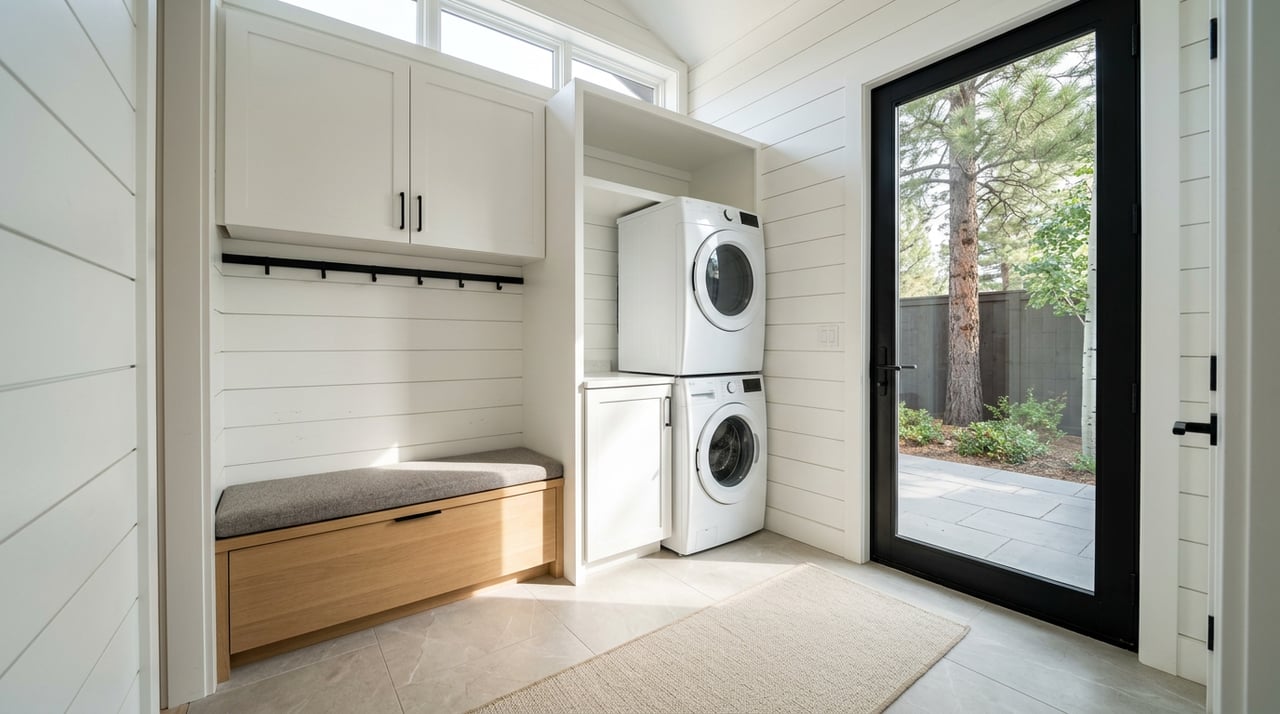
- In-unit laundry and dedicated parking often improve occupancy and ADR in urban neighborhoods
- A legal accessory unit can unlock extra income if zoning and primary-residence rules allow it
- Professional photos, keyless self check-in, and disciplined pricing can lift conversions within a few months
The right improvements depend on the property, but you will often see uplift from small, guest-friendly upgrades.
A quick 10-minute workflow
Use this order to scan any Denver listing fast and fairly.
Open the listing and note the nightly price, cleaning fee, minimum stay, cancellation policy, and whether an STR license number is shown for short-term use. Confirm STR rules on the Denver STR page.
If short-term, verify license status in city resources. If long-term, review the residential rental licensing program.
Read the calendar. Count booked nights for 30 and 90 days. If doing several listings, download the city data from InsideAirbnb.
Pull neighborhood ADR and occupancy from the AirDNA Denver overview. Build a conservative revenue range.
Check taxes, parcel info, and owner address on the Denver Assessor’s Property Records.
For long-term rent comps, start with Rentometer’s Denver overview and then cross-check with active listings.
Run your red flag scan. If any hard stop appears, pause and escalate to legal review or request more documents before you proceed.
Simple formulas you can use today
- Gross STR revenue: ADR × occupancy rate × 365
- RevPAR: ADR × occupancy
- STR net margin rule of thumb: subtract platform fees, cleaning and turnover, utilities, insurance, management, and a maintenance reserve. Stress-test by lowering occupancy 10 to 25 percent.
- Long-term NOI: monthly market rent minus property tax, insurance, HOA, vacancy reserve, and capital reserve
Use market-level ADR and occupancy from the AirDNA Denver overview, then sensitize your assumptions. Keep your first pass simple and conservative.
When to call in help
If a listing clears the legal filter and the numbers look workable, you are close. The next step is to validate with on-the-ground comps, HOA documents, and a realistic operating plan. That is where a local, investor-minded broker adds serious value.
If you want a Denver-specific read on your shortlist, reach out to Chad Goodale. You will get street-level comp context, help verifying licenses and HOA rules, and a clear plan tailored to your strategy.
FAQs
What is Denver’s primary residence rule for STRs?
- Denver limits STRs to your primary residence, requires a license, and makes you display the license number in ads; see the city’s STR rules.
How much is Denver’s lodger’s tax on STRs?
- The city’s Lodger’s Tax is 10.75 percent of the lodging amount, and hosts must register and remit; details are in the city’s tax guide.
How do I estimate STR revenue from a listing without paid tools?
- Use the listing calendar to count booked nights, then apply ADR and occupancy baselines from the AirDNA Denver overview and validate with InsideAirbnb.
What licenses do I need for a Denver long-term rental?
- Most rentals over 30 days need a residential rental license and may require inspections and tenant-rights information; start with the city’s program overview.
Do HOAs in Denver allow short-term rentals?
- Many HOAs prohibit STRs even if the city allows them in your zone, so review condo or HOA governing documents and cross-check the city’s STR guidance.